
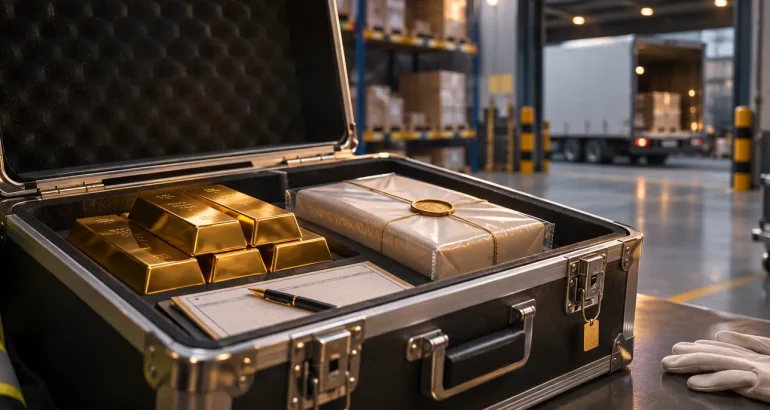
The $22 Million Gold Heist: 5 Lessons for Jewellers
On 17 April 2023, an Air Canada flight from Zurich landed at Toronto Pearson International Airport carrying about 400 kilograms of near-pure gold in roughly 6,600 small bars, along with about C$2.5 million in foreign currency. Within a few hours, it was gone. Nobody realised until the armoured guards arrived to collect it and warehouse staff couldn’t find it.
Police have called it the largest gold theft in Canadian history (CTV News). It wasn’t pulled off with drills or explosives. According to the evidence, it took a keyboard, a printer and a hired truck.
For jewellery businesses, two lessons stand out. First, even sophisticated security can fail when people and systems are trusted without being checked. Second, once valuable stock goes missing while someone else has it, figuring out who pays can turn into a long, expensive legal fight.
How the gold allegedly disappeared
The details below come from evidence and testimony in the Canadian criminal cases. Some of it has not been tested by a verdict, and the people accused are presumed innocent unless convicted.
The system was redirected. An automated sorting system routes incoming cargo at the warehouse by reading each shipment’s code. The court has heard that someone used the login credentials of other Air Canada employees to change the gold’s routing, so the system treated it as ordinary freight. Instead of going to the secure valuables area, it went to a general area where it got no special scrutiny.
The paperwork was altered. Prosecutors allege that a genuine air waybill was printed through Air Canada’s cargo system and altered so the shipment could be collected without authorisation. Police have said the document was a duplicate printed inside Air Canada Cargo. Reporting on the case says the security cameras covering the printers weren’t working that day.
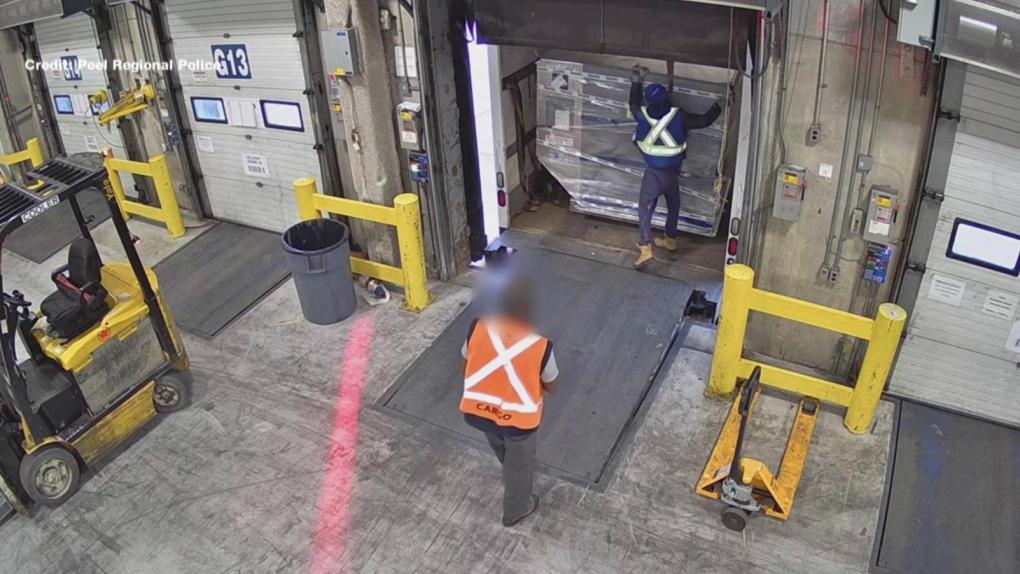
Staff handed it over. Security footage shows a truck backing into a loading bay at about 6:30 pm. Warehouse workers, who are not accused of knowingly taking part, found the crate and loaded it onto the truck. It then headed to rural roads with no cameras.
How it unravelled
According to reporting on the case, the driver took off a work glove at the warehouse and left fingerprints, which gave police an early lead. In September 2023, Pennsylvania state troopers stopped a car heading for Canada and found 65 firearms in it. The driver was the same man police later linked to the gold collection. He is now serving a sentence in the United States on firearms charges.
Arsalan Chaudhary has admitted his part in the heist. He testified that he and Simran Preet Panesar, a former Air Canada manager, planned it together and divided the gold 30/70. He told the court he melted and sold some of his share, then travelled overseas, where he says he was abducted in Pakistan and forced to give up the rest (Canadian Press via Castanet). Panesar denies the allegations and is still wanted. Chaudhary was sentenced to four years in prison.
Parmpal Sidhu, a former Air Canada cargo employee, has pleaded not guilty. Prosecutors allege he printed the altered waybill. His defence says his login was hijacked, and the court heard that staff often used each other’s profiles on shared computers (CP24). A verdict is expected in January 2027.
If Chaudhary’s account is accurate, most of the gold has never been recovered.
The $18,000 ruling
The criminal trials are only half the story. The part most relevant to jewellers happened in civil court.
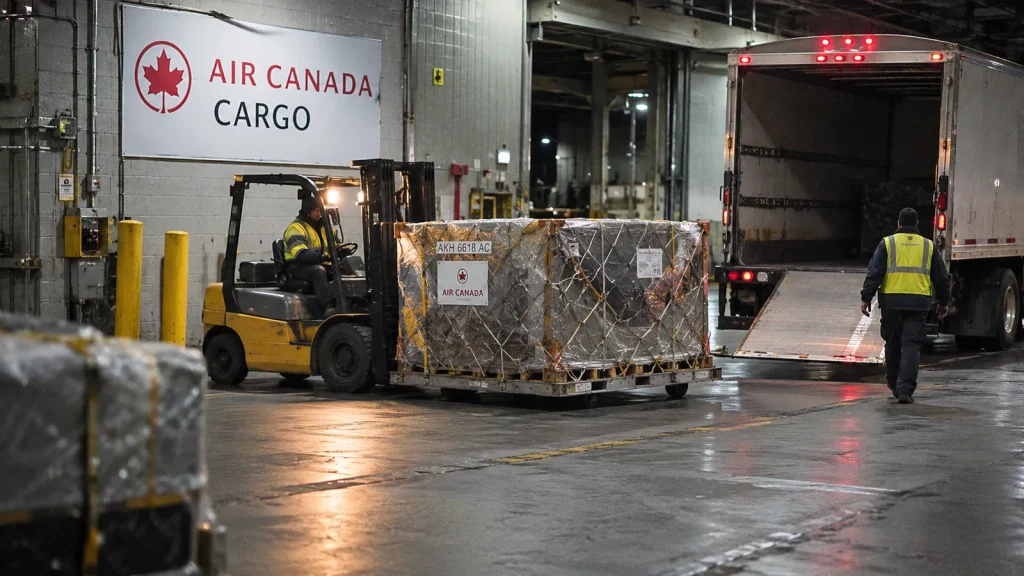
Brink’s, the security company that arranged the shipment, sued Air Canada for the full value of the gold and cash. Air Canada accepted it was responsible for the cargo while it had it, but argued that an international treaty, the Montreal Convention, limited what it owed.
In January 2025, Canada’s Federal Court agreed with Air Canada. The paperwork clearly identified the shipment as gold. But the judge found that Brink’s hadn’t made the formal “special declaration of interest in delivery” needed to unlock a higher limit, so the standard cap applied. That cap works out at about 40 per kilogram, the same rate that applies to a lost suitcase. Air Canada was ordered to pay roughly C$18,000 for a shipment worth more than C$20 million (CTV News).
Brink’s appealed, seeking more than C$21 million. In 2026, the two companies settled privately, and the appeal was dropped (CTV News). Because the terms weren’t disclosed, the final compensation is unknown. The only public figure is the court’s initial ruling of about C$18,000.
5 lessons for jewellery businesses
1. The handover is where stock is most exposed
The gold wasn’t taken from a vault. It was taken in the gap between one party passing it on and the next taking responsibility. Jewellery businesses have plenty of these gaps:
- Stock moving between your own stores or to a wholesaler
- Pieces out on consignment, or held on memo from a supplier
- Work with setters, polishers, engravers and repairers
- Stock travelling to and from trade fairs and exhibitions
- Parcels in the hands of couriers and freight carriers
Map every point where stock changes hands. At each one, know who is responsible for it, how it is recorded, and whether your cover applies at that stage.
2. Verify documents, don’t just accept them
A genuine document with a few altered details was allegedly enough to release millions of dollars of gold. Collection dockets, repair tickets, memo paperwork and courier labels can be targets too. Check them against your own system rather than the paper in front of you. Confirm the collector’s identity. Treat handwritten changes on official documents as a red flag.
3. Trusted people and systems still need checks
Shared logins and cameras that weren’t working may each have looked minor, but together they made the theft easier to carry out and harder to trace. Practical steps include:
- Individual logins for point-of-sale, stock and courier systems, with no sharing
- Checking regularly that cameras are recording, especially over safes, dispatch areas and printers
- Requiring two people to approve the release of high-value items
- Logging who opens the safe and when
For more on the physical side of store security, read our guide 7 Essential Security Requirements Insurers Look for in a Jewellery Showroom.
4. Recovery isn’t a plan
Police charged most of the people they say were involved, yet much of the gold appears to be gone. Stolen precious metals can be extremely difficult to recover. Gold can be melted, stones re-cut and settings broken up. Hoping stolen stock turns up is not a way to protect your business.
5. Know what other parties will actually pay
The Brink’s case shows that a carrier can be found responsible for a loss and still owe only a fraction of its value. Couriers, freight forwarders, airlines and other service providers usually limit their liability in their terms or under law, often well below what jewellery is worth. Unless you formally declare a higher value and pay the required premium, the default limit may be all that’s on offer.
For jewellery businesses, this highlights an important distinction: what a carrier may be legally required to pay is not necessarily the value of the stock entrusted to it.
Before you send stock anywhere, check the carrier’s liability terms and declare values properly where you can. Appropriate specialist insurance can provide an important layer of financial protection and reduce your reliance on recovering losses directly from a third party, subject to your policy’s terms and conditions. That makes it essential to understand how your Jewellers Block insurance responds to goods in transit, including any requirements for approved carriers, packaging, declared values and security conditions, so a claim isn’t complicated by a condition you didn’t know about.
Protecting your stock wherever it goes
The Pearson heist wasn’t a smash-and-grab. It succeeded through ordinary weak points: a borrowed login, an altered form, a handover nobody questioned. The legal fight that followed shows how little you may recover from another party when stock is lost in their care.
Centrestone Jewellers Block is specialist insurance built for Australian jewellery retailers, wholesalers and manufacturers. Cover can be tailored to protect stock in store, in the safe, on consignment, in transit and at trade shows. Our team understands the jewellery trade and can help you work through the custody and transit risks in your business.
Find out more about Centrestone Jewellers Block
This article is general information only and doesn’t take into account your business’s objectives, financial situation or needs. Cover is subject to the policy terms, conditions, limits and exclusions. Please read the relevant policy documents before deciding whether this product is right for you. Details of the Toronto case come from public court reporting. Matters still before the courts remain allegations unless a conviction has been recorded.